

Why Does My Garage Door Opener Click but the Door Doesn’t Move?
A clicking garage door opener that doesn’t move the door usually means the opener’s motor is running, but something in the connection between the opener and the door most often a disconnected trolley, a broken drive gear, or a failed spring is preventing that motion from transferring to the door itself. Rissland Garage Doors has been repairing garage door openers throughout Northern and Central New Jersey since 1972, and this guide covers the most common reasons for this specific symptom so homeowners can understand what’s likely happening before calling for service.
This is one of the more confusing symptoms a homeowner can run into, because the opener sounds like it’s working — the motor hums, something clicks but the door itself stays put. The instinct is often to assume the opener has failed outright, but a clicking sound with no movement usually points to a break somewhere in the chain of parts between the motor and the door, not necessarily the motor itself.
What Does It Mean When a Garage Door Opener Clicks Without Moving the Door?
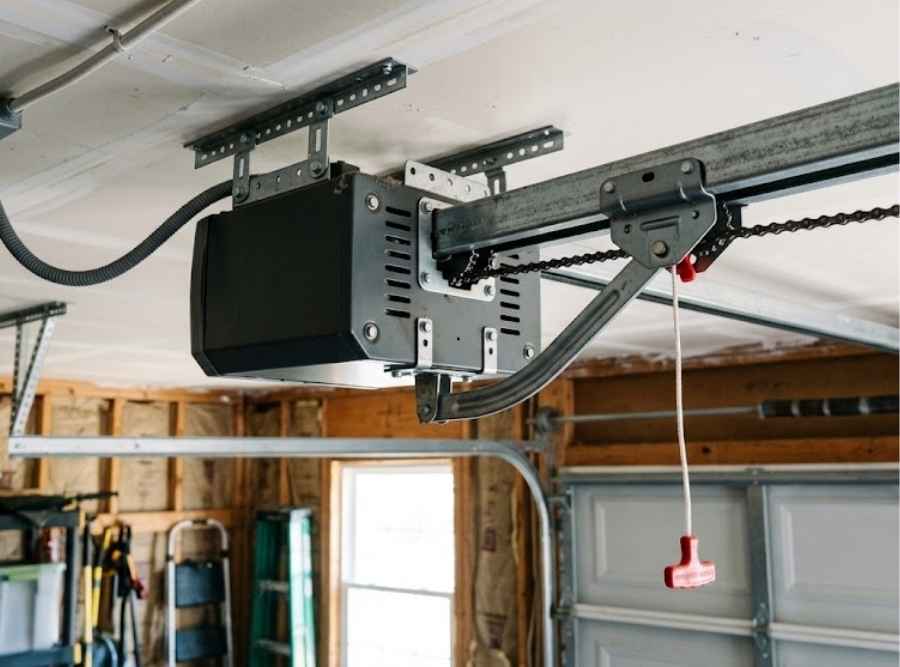
The clicking sound is typically the motor attempting to engage, which tells you the opener is receiving power and the motor itself is likely functioning. What it doesn’t tell you is whether that motion is actually reaching the door. Garage door openers work by moving a trolley along a rail, which is connected to the door through an arm; if that connection is broken, disconnected, or the drive mechanism itself has failed, the motor can run and click without the door moving at all.
Could a Broken Spring Cause This Symptom?
Yes, and it’s one of the more common causes. Garage door openers are not designed to lift the full weight of the door on their own — the spring system does most of that work, and the opener is only meant to guide the door along a path the spring has already balanced. If a spring has broken, the opener may attempt to move the door and simply not have the mechanical capacity to do so, which can produce a clicking or straining sound rather than smooth movement. Continuing to try the opener in this situation adds unnecessary strain to a motor that isn’t built to compensate for a failed spring.
What Other Mechanical Issues Cause This?
A few other common culprits can produce the same symptom:
- A stripped or broken drive gear inside the opener unit, which prevents the motor’s motion from reaching the trolley
- A disconnected or damaged trolley, which is the component that physically pulls the door along the track
- A broken drive belt or chain, depending on the opener type, which severs the connection between the motor and the trolley
- A door manually disconnected from the opener via the emergency release cord, which stops the opener from engaging the door at all
Each of these produces a similar symptom from the homeowner’s perspective — clicking or motor noise with no door movement but the actual repair differs significantly depending on which one is happening.
How Can You Tell the Difference Between an Opener Problem and a Spring Problem?
One useful, safe observation is to check whether the door feels unusually heavy if manually lifted a few inches with the opener disconnected via the release cord — though this should only be attempted briefly and carefully, since a door with a broken spring can be significantly heavier than expected and should not be forced. A door that feels normal in weight when lifted by hand points more toward an opener-side issue like a drive gear or trolley problem, while a door that feels extremely heavy or won’t lift smoothly points toward the spring system. This distinction matters because spring repairs and opener repairs involve very different components and different levels of risk.
Is It Safe to Keep Trying the Opener If It’s Just Clicking?
No. Repeatedly pressing the opener button when the door isn’t moving puts continued strain on whatever component has already failed, and in the case of a broken spring, it puts strain on an opener motor that was never designed to lift the door’s full weight. This is one of the more common ways a single-component failure turns into a more involved repair, since forcing the system can damage the drive gear, motor, or trolley even if the original failure was somewhere else in the system.
What Does Rissland Check When a Garage Door Opener Clicks Without Moving the Door?
When we’re called out for this symptom, we start by checking whether the door is disconnected from the opener and whether the spring system is intact, since those are the most common underlying causes. From there, we inspect the drive mechanism itself — the gear, belt or chain, and trolley to determine whether the issue is isolated to the opener or connected to the door’s overall balance. That sequence helps avoid replacing an opener component when the actual problem is a failed spring, or vice versa.
If your garage door opener is clicking or running without moving the door, having it inspected before continuing to use it can prevent a contained repair from becoming a larger one. Rissland Garage Doors has been servicing garage door openers throughout Northern and Central New Jersey since 1972.
Frequently Asked Questions About a Clicking Garage Door Opener
Why does my garage door opener click but the door won’t move?
This usually means the motor is running but the connection between the opener and the door has failed, often due to a broken spring, a stripped drive gear, a disconnected trolley, or a broken drive belt or chain. The specific cause determines the repair.
Can a broken spring make the opener click without lifting the door?
Yes. The opener relies on the spring system to counterbalance the door’s weight, so if a spring has broken, the motor may run and click without being able to move the door, since it isn’t designed to lift the full weight on its own.
Is it bad to keep pressing the opener button if the door isn’t moving?
Yes. Continuing to trigger the opener when the door isn’t moving puts added strain on whatever component has already failed, which can turn a single-part repair into damage across multiple components.
How do I know if the problem is the opener or the garage door spring?
A door that feels normal in weight when carefully lifted a few inches by hand (with the opener disconnected) usually points to an opener issue, while a door that feels unusually heavy points to a spring problem. This should only be checked briefly and carefully.
Can I fix a clicking garage door opener myself?
Some causes, like a manually disconnected release cord, are safe to check yourself. However, issues involving the spring system, drive gear, or internal opener components should be diagnosed and repaired by a professional due to the tension and mechanical complexity involved.