

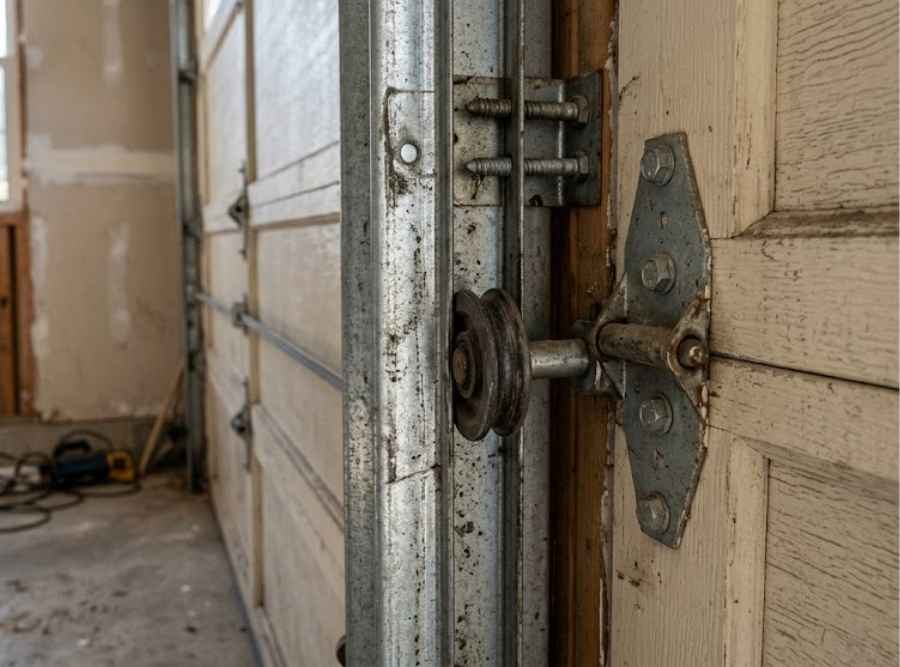
How Much Does It Cost to Fix a Garage Door That’s Fallen Off Its Track?
Fixing a garage door that’s come off its track typically involves realigning the rollers and track, repairing bent or damaged track sections, and sometimes replacing rollers or hardware that were damaged when the door derailed. Rissland Garage Doors has been repairing garage doors throughout Northern and Central New Jersey since 1972, and this guide covers what typically drives the cost of an off-track repair so homeowners know what to expect before calling for service.
A garage door coming off its track is one of the more alarming things a homeowner can see happen, especially if it happens suddenly or the door is stuck at an odd angle. The good news is that in most cases, an off-track door is a mechanical problem with a defined repair path but the actual cost depends heavily on what caused the derailment and how much additional damage occurred in the process.
What Determines the Cost of an Off-Track Garage Door Repair?
The cost of this repair depends mainly on three things: how the door came off track, whether the track itself was bent or damaged, and whether other components like rollers, cables, or hinges were damaged during the incident. A door that slipped out of a track that’s simply loose or slightly misaligned is a more contained repair than a door that came off because a cable snapped or a roller failed entirely, since those situations often mean additional parts need replacement, not just realignment.
This is part of why “how much does it cost to fix an off-track door” doesn’t have one flat answer — it’s really a range that depends on the extent of what happened, similar to how the cost of any garage door repair depends on which components are actually involved.
What Usually Causes a Garage Door to Come Off Its Track?
A door coming off track is rarely a random event — it’s typically the result of one of a few underlying issues:
- A broken cable or spring that suddenly changes how the door is being lifted or supported
- A track that’s become bent, loose, or misaligned over time
- A worn or damaged roller that’s no longer riding properly inside the track
- An obstruction that forces the door against the track with enough pressure to knock it loose
- A door that was struck by a vehicle or other object, forcing the track out of alignment
Identifying which of these caused the derailment is part of the diagnosis, since the repair path is different depending on whether the track itself needs to be bent back into shape, replaced, or simply realigned.
Is a Bent Track More Expensive to Fix Than a Misaligned One?
Generally, yes. A track that’s simply out of alignment — loose brackets, minor shifting is usually a more straightforward adjustment than a track that’s been physically bent or dented, since a bent track section often needs to be replaced rather than adjusted back into place. Track sections are typically sold and replaced in segments rather than as one continuous piece, which can help contain the cost if only a portion of the track was affected rather than the full run.
Does an Off-Track Door Always Damage Other Components?
Not always, but it’s common enough that it’s worth checking. When a door comes off track, the sudden change in how the door is moving can put unexpected stress on nearby rollers, hinges, and cables, even if those components weren’t the original cause. This is why a proper off-track repair usually includes inspecting the rest of the door system, not just the section of track where the derailment occurred — catching a stressed roller or a cable that’s starting to fray during that inspection can prevent a second service call.
Should You Try to Push a Garage Door Back Onto Its Track Yourself?
No. A garage door that’s come off its track is often still under tension from the spring system, and attempting to force it back into place can cause the door to fall, the track to bend further, or a cable or spring to fail unexpectedly. This is one of the clearer cases where a mechanical problem should be left to a technician rather than addressed as a DIY fix, since the door’s weight and the tension in the system aren’t something that’s safe to work against by hand.
How Does This Differ From General Garage Door Repair Costs?
An off-track repair is one specific category within the broader range of garage door repairs, and it tends to fall on the more involved end depending on what caused it. For a broader look at what typically affects repair costs across different types of garage door problems.
What Does Rissland Check on an Off-Track Garage Door Call?
When we’re called out for a door that’s come off its track, we start by identifying what caused it — a cable, a roller, a bent track, or an obstruction since that determines the actual repair path. From there, we check the rest of the door system for any related stress or damage before finalizing what needs to be repaired or replaced. That approach helps make sure the door isn’t sent back into regular use with a related issue still unaddressed.
If your garage door has come off its track, having it inspected before attempting to move it further can prevent a contained repair from turning into a larger one. Rissland Garage Doors has been repairing garage doors throughout Northern and Central New Jersey since 1972.
Frequently Asked Questions About Off-Track Garage Door Repair
Can a garage door that’s off its track be repaired, or does it need to be replaced?
In most cases, an off-track door can be repaired by realigning or replacing the affected track section and addressing whatever caused the derailment, such as a broken cable or damaged roller. Full door replacement is rarely necessary unless the panels themselves were damaged in the incident.
What causes a garage door to come off its track?
Common causes include a broken cable or spring, a bent or loose track, a worn roller, an obstruction that forces the door against the track, or an impact from a vehicle or object. Identifying the cause determines the specific repair needed.
Is it safe to push a garage door back onto its track myself?
No. The door may still be under spring tension, and forcing it back into place can cause it to fall or damage the track, cables, or springs further. This repair should be handled by a technician.
Does an off-track door always mean the track needs to be replaced
Not always. A track that’s simply misaligned can often be adjusted back into place, while a track that’s bent or dented typically needs the affected section replaced rather than repaired.
Can a garage door coming off track damage other parts of the system?
It can. The sudden change in how the door moves can stress nearby rollers, hinges, and cables even if they weren’t the original cause, which is why a full inspection of the system is part of a proper off-track repair.

Rissland Garage Doors & Services Team. Serving New Jersey for over 50 years, the expert team at Rissland Garage Doors specializes in residential door repair, opener installations, and emergency service. Operating with salaried, non-commissioned technicians, their team offers trusted guidance on garage door safety, spring maintenance, and weatherproofing across Essex, Morris, and Passaic counties.