

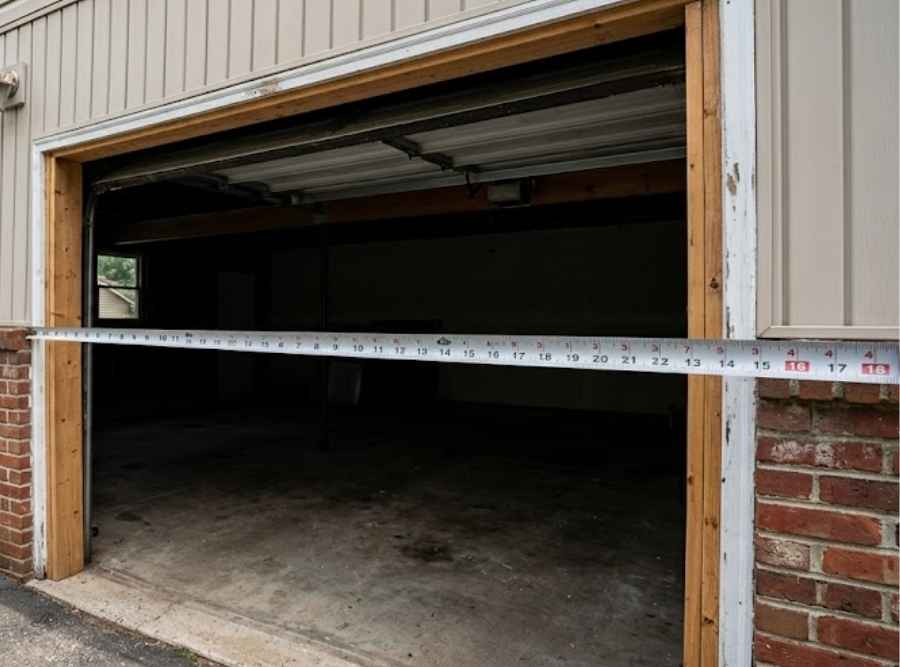
How Do I Properly Measure My Garage Door Opening Before Buying a Replacement Door?
Properly measuring a garage door opening involves recording the exact width and height of the opening, the sideroom and headroom available around it, and the backroom depth needed for the track and spring system, since a garage door needs precise clearances on all sides to operate correctly. Rissland Garage Doors has been installing garage doors throughout Northern and Central New Jersey since 1972, and this guide covers what needs to be measured and why each measurement matters before ordering a replacement door.
Ordering a new garage door based on rough or estimated measurements is one of the more common ways homeowners end up with fitting or installation problems. A garage door isn’t just sized to the opening itself — the space around the opening matters just as much, since the track, springs, and hardware all need specific clearances to operate properly.
What Measurements Are Needed for a Garage Door Opening?
A complete set of measurements includes several distinct dimensions, not just the width and height of the opening itself:
- Opening width and height — measured at the narrowest points, since older openings aren’t always perfectly square
- Sideroom — the space on either side of the opening, needed for the vertical tracks and spring mounting hardware
- Headroom — the space above the opening, needed for the horizontal tracks, springs, and opener mechanism
- Backroom — the depth of the garage from the opening back into the space, needed for the door to travel fully open along the horizontal track
Each of these plays a different role, and a door that’s the right width and height for the opening can still fail to install properly if there isn’t enough sideroom, headroom, or backroom to accommodate the hardware.
Why Does Sideroom and Headroom Matter So Much?
Sideroom accommodates the vertical tracks and the brackets that anchor the spring system to the wall on either side of the opening. If there isn’t enough sideroom, certain track and spring configurations may not fit without modification. Headroom serves a similar purpose above the door, it needs to accommodate the horizontal tracks, the spring assembly (which is often mounted just above the door), and in most cases the opener unit itself. Openers and certain spring systems require more headroom than a standard measurement might suggest, which is part of why this measurement is often the source of installation surprises when it’s estimated rather than precisely measured.
What Happens If Backroom Is Too Short?
Backroom is the depth needed inside the garage, measured from the back of the opening into the space, for the door to travel along the horizontal track when fully open. If backroom is shorter than what the door and track system require, the door may not be able to open completely, or a different track configuration such as a high-lift or low-headroom track may be needed to accommodate the space available. This is a measurement that’s easy to overlook since it doesn’t affect the door’s fit at the opening itself, only how it operates once installed.
Is It Safe to Estimate These Measurements Myself?
For a rough sense of what’s involved, yes, but ordering a door based on self-measured dimensions carries real risk if any measurement is off, even by a small amount. Garage door openings, especially in older homes, aren’t always perfectly square or consistent in width from top to bottom, which is why professional installers typically measure at multiple points along each dimension rather than taking a single measurement and assuming it holds true across the whole opening. A door ordered to the wrong dimensions, even slightly, can result in gaps, binding, or a door that doesn’t operate smoothly once installed.
Do Older Garage Door Openings Need Special Attention When Measuring?
Often, yes. Older homes can have openings that have shifted slightly over time, framing that isn’t perfectly square, or non-standard dimensions that don’t match typical manufactured door sizes. In these cases, measuring at several points across the width and height of the opening rather than a single measurement at the center helps identify any inconsistencies that could affect how well a standard-sized door fits, or whether a custom-sized door is the more reliable option.
What Does Rissland Do When Measuring for a New Garage Door?
When we measure a garage opening for a replacement door, we record the width and height at multiple points, along with the available sideroom, headroom, and backroom, to confirm the door and hardware configuration will fit correctly before ordering anything. This step matters more than it might seem, since correcting a measurement error after a door has already been ordered typically means a delay while the correct door is remade or a different configuration is sourced.
If you’re planning to replace your garage door and want to make sure the new door and hardware will fit correctly the first time, Rissland Garage Doors can measure your opening and confirm the right configuration before you order. We’ve been installing garage doors throughout Northern and Central New Jersey since 1972.
Frequently Asked Questions About Measuring a Garage Door Opening
What measurements do I need before buying a new garage door?
You need the width and height of the opening, plus the sideroom, headroom, and backroom around it. Sideroom and headroom accommodate the tracks and spring hardware, while backroom determines whether the door can fully open.
How much headroom does a garage door opener need?
Headroom requirements vary by opener and spring system, but most standard setups need enough clearance above the opening for the horizontal tracks, spring assembly, and opener unit. Low-headroom track kits are available for openings with limited space above.
Can I measure my garage door opening myself, or do I need a professional?
You can get a rough sense of the dimensions yourself, but ordering a door based on self-measured numbers carries risk, since older openings especially aren’t always perfectly square. Professional measurement at multiple points reduces the chance of a fitting issue.
What happens if my garage doesn’t have enough backroom for a standard door?
If backroom is limited, a high-lift or low-headroom track configuration may be needed instead of a standard track system, allowing the door to operate properly within the available depth.
Are older garage door openings harder to measure accurately?
They can be, since older openings may have shifted slightly over time or were never perfectly square to begin with. Measuring at multiple points across the width and height helps catch inconsistencies that a single measurement might miss.