

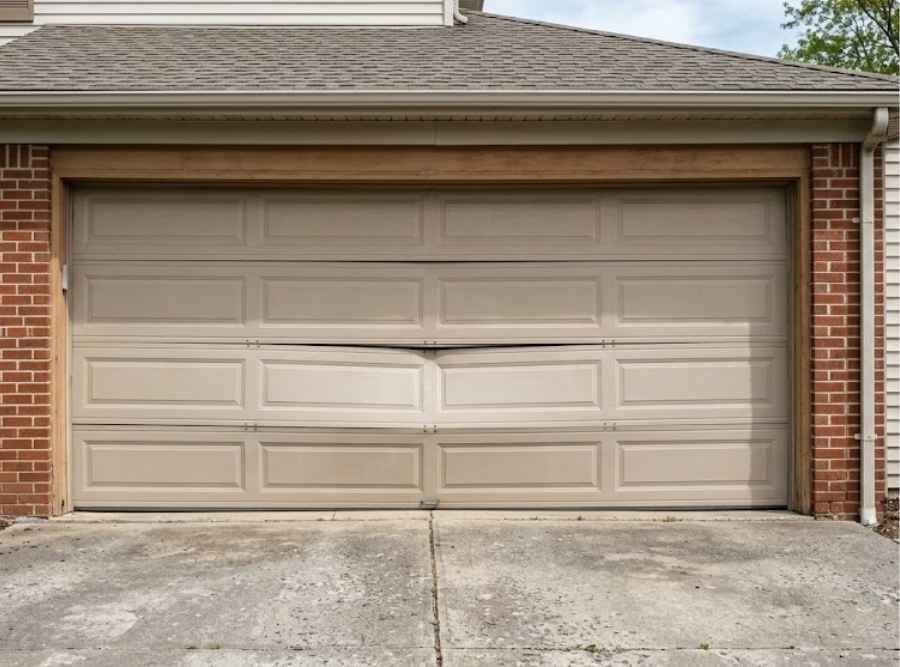
Is It Normal for a Garage Door to Sag or Bow in the Middle?
No, a garage door sagging or bowing in the middle is not normal and typically points to a structural or mechanical issue — most often a failing panel, a bent horizontal strut, an imbalance in the spring system, or age-related weakening of the door’s material. Rissland Garage Door Service has been repairing garage doors throughout Northern and Central New Jersey since 1972, and this guide covers the common causes of a sagging or bowing door so homeowners know what it means and when it needs attention.
A garage door that visibly bows or sags across the middle, whether the door is open or closed, is a sign that something in the door’s structure or support system isn’t distributing weight the way it was designed to. It’s easy to notice but not always easy to diagnose from the outside, since several different underlying issues can produce a similar visual result.
What Does It Mean If a Garage Door Bows in the Middle When Closed?
When a door bows outward or inward across its width while closed, it’s usually a sign that the panel itself has lost some of its structural rigidity, or that a horizontal strut — a reinforcing bar that runs across the width of certain panels has bent or come loose. Wider garage doors, particularly double-car doors, rely more heavily on these struts to keep the panel rigid across the span, since a wide, unsupported panel is more prone to flexing under wind pressure or its own weight over time.
Can a Bad Spring Cause a Garage Door to Sag?
Yes, though this shows up differently than a bowed panel. If the spring system is out of balance — one spring weaker than the other, or a spring that’s lost tension over time — the door can hang unevenly, with one side sitting lower than the other rather than the door’s own panel material sagging. This can look similar to a sagging door at first glance, but it’s a balance issue rather than a structural one, and it’s diagnosed and corrected differently than a bowed panel.
What Are the Most Common Causes of a Sagging or Bowing Garage Door?
A few specific issues tend to be behind this symptom:
- A bent, damaged, or missing horizontal strut, particularly on wider double-car doors
- Age-related weakening of the panel material, especially on older steel doors that have thinned or developed rust over time
- An imbalance in the spring system causing one side of the door to hang lower than the other
- Water damage or rot in wood garage doors, which can cause sections to warp or sag
- Wind pressure on a wide door without adequate internal reinforcement
Does a Sagging Door Get Worse Over Time?
Generally, yes, if the underlying cause isn’t addressed. A panel that’s already flexing or a strut that’s already bent is under continued stress every time the door operates, which tends to accelerate the problem rather than let it stabilize on its own. A spring imbalance follows a similar pattern — the uneven load doesn’t correct itself, and it can put additional strain on the opener and on the door’s hardware as the imbalance continues.
Is It Safe to Keep Using a Garage Door That’s Sagging?
It depends on the cause and severity, which is why this isn’t something to diagnose from a distance. A minor cosmetic bow that isn’t affecting how the door operates is a different situation than a door that’s visibly straining, moving unevenly, or showing signs the panel or strut could fail further. Continuing to operate a door with a significant structural or balance issue can put additional stress on the opener, springs, and hardware, and in more severe cases can affect how safely the door operates overall.
How Is a Sagging or Bowing Garage Door Repaired?
The repair depends entirely on the cause. A bent or missing strut can often be replaced or reinforced without replacing the full panel. A spring imbalance is corrected by adjusting or replacing the spring system so both sides are carrying the load evenly. A panel that’s structurally weakened by age, rust, or water damage may need to be replaced rather than repaired, particularly if the material itself has lost integrity rather than just its shape.
What Does Rissland Check on a Sagging or Bowing Garage Door?
When we’re called out for a door that’s sagging or bowing, we start by determining whether the issue is in the panel itself, the strut, or the spring system, since each points to a different repair. We also check whether the door is still opening and closing safely in its current condition, since that affects whether it’s safe to continue using while repairs are scheduled.
If your garage door is sagging or bowing in the middle, having it inspected can identify whether the issue is a strut, a panel, or the spring system before it progresses further. Rissland Garage Door Service has been repairing garage doors throughout Northern and Central New Jersey since 1972.
Frequently Asked Questions About a Sagging or Bowing Garage Door
Why is my garage door bowing in the middle when it’s closed?
This is usually caused by a bent or missing horizontal strut, age-related weakening of the panel material, or wind pressure on a wide door without adequate internal reinforcement. It’s more common on wider double-car doors.
Can a broken or weak spring cause a garage door to sag?
Yes, though it looks different from a bowed panel. A spring imbalance typically causes one side of the door to hang lower than the other rather than the panel material itself flexing, and it’s diagnosed and corrected differently than a structural sag.
Is it safe to keep using a garage door that’s sagging?
It depends on the cause and severity. A minor cosmetic bow that doesn’t affect operation is different from a door that’s straining or moving unevenly, which can place additional stress on the opener, springs, and hardware if left unaddressed.
Does a sagging garage door need to be replaced, or can it be repaired?
It depends on the cause. A bent strut or spring imbalance can often be repaired without replacing the door, while a panel that’s structurally weakened by age, rust, or water damage may need to be replaced.
Are wider garage doors more likely to sag or bow?
Yes. Wider double-car doors rely more heavily on horizontal struts to stay rigid across the span, so they’re more prone to bowing if a strut is bent, missing, or the panel material has weakened over time.