

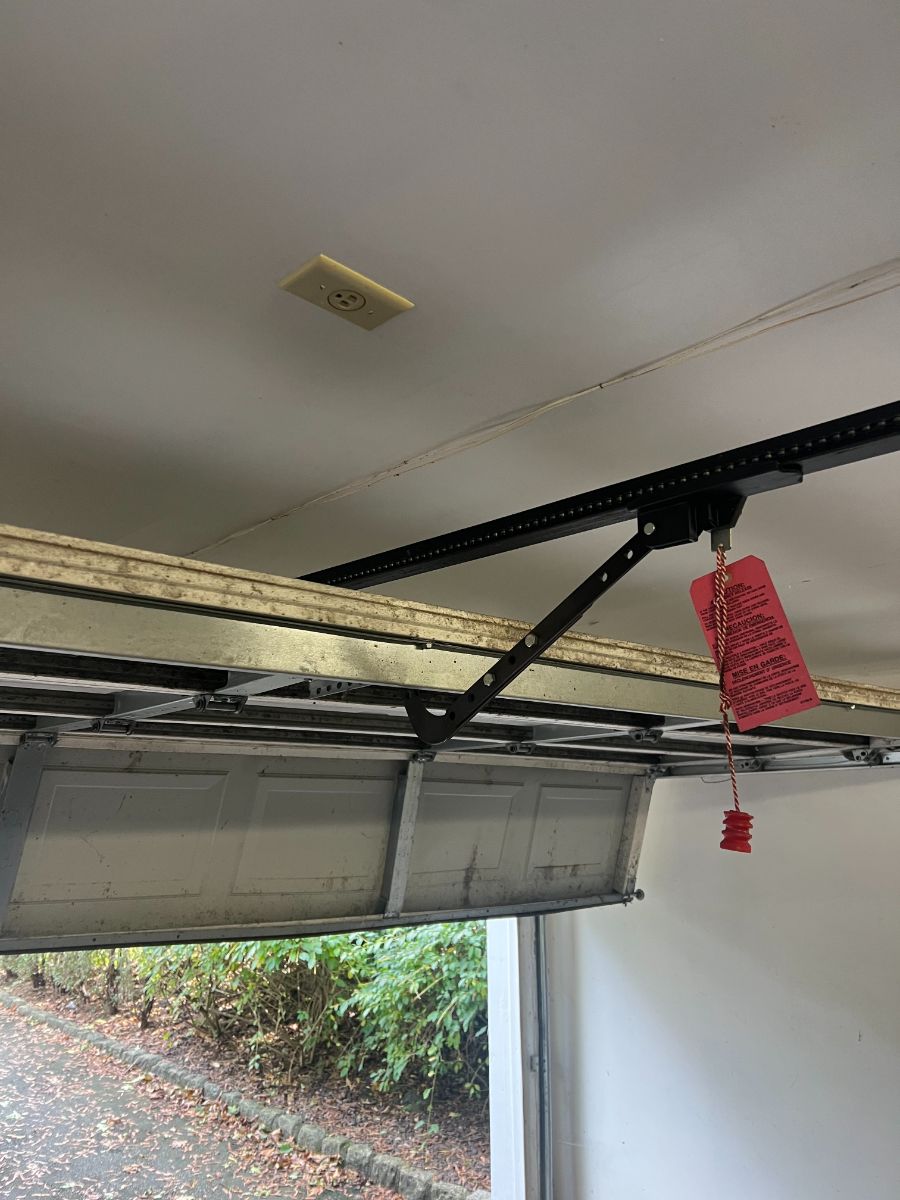
Garage Door Cables: Why a Broken Cable Is Never “Just a Small Repair”
A snapped garage door cable is more than an inconvenience. When a cable fails, the door is no longer lifting evenly, which immediately turns a normal daily system into a safety risk. A garage door that won’t open or won’t close doesn’t just disrupt your routine — it can leave your vehicle trapped, your belongings exposed, or worse, create a situation where the door can move unpredictably.
This is one of those problems that often looks manageable from the outside. In reality, garage door cables operate under extreme tension, and once that tension is uneven, the entire system becomes unstable.
That’s why cable failures are one of the situations where professional repair isn’t just recommended — it’s necessary.
Why Garage Door Cable Repairs Are Not DIY Projects
Garage door cables work directly with the springs to support the full weight of the door. When one cable snaps or frays, the door instantly loses balance. That imbalance is what makes cable failures dangerous.
In the field, this is where people get hurt.
A door with a broken cable may still appear to move, especially on one side. That false sense of control leads homeowners to try forcing the door open or closed, not realizing that the remaining cable and spring are carrying uneven load. When that tension releases suddenly, the door can drop or twist without warning.
This is why professionals strongly advise against attempting manual repairs. The tools, techniques, and experience required to safely release tension and stabilize the door aren’t things most homeowners have access to.
What to Do Immediately If a Garage Door Cable Snaps
When a cable fails, the safest response is also the simplest.
Stop using the door.
A cable failure means the door is no longer lifting evenly. Continuing to operate it increases the risk of the door binding, dropping, or damaging other components.
Call a service professional.
A trained technician can assess whether the door is safe to secure, how the remaining tension is distributed, and what steps are needed to restore proper balance.
If the door is stuck open, do not cut the cable yourself.
Cutting a high-tension cable without properly controlling the system can cause a sudden release of energy. Professionals use controlled methods to relieve tension safely before removing damaged components.
In most cases, both cables should be replaced.
Garage door cables wear at similar rates. Replacing only one often leads to uneven operation and another failure not far down the road.
Can You Manually Open a Garage Door With a Broken Cable?
Technically, it may be possible. Practically, it’s rarely a good idea.
When a cable breaks, the door’s weight is no longer evenly supported. Even using the emergency release can cause the door to lift unevenly, twist in the tracks, or drop suddenly. This is especially risky with heavier doors.
If access to the garage is absolutely necessary, a professional can secure the door, control the remaining tension, and safely gain entry without creating further damage or risk.
Why Cable Failures Create Bigger Problems Than They Seem
Garage door cables don’t just help the door move — they control how the door moves.
When a cable fails, several things happen at once. The door becomes unbalanced. The remaining cable takes on extra load. The opener may strain or stop entirely. Rollers and tracks can be pulled out of alignment. What starts as a cable issue can quickly cascade into a larger system failure.
This is why delaying repair often leads to higher costs. A door that crashes down unexpectedly can damage panels, tracks, or the opener itself. At that point, the repair becomes much more involved than a straightforward cable replacement.
How Garage Door Cables Work (And Why They Matter)
Garage door cables connect the bottom brackets of the door to the spring system, working together to lift and lower the door in a controlled way.
Lift cables run along the sides of the door and wrap around drums or pulleys as the door moves. Their job is to distribute the door’s weight evenly as the springs counterbalance the load.
On systems with extension springs, retaining cables serve an additional safety role. If an extension spring breaks, the retaining cable prevents it from whipping freely, reducing the risk of injury or property damage.
When cables are intact and properly tensioned, the door lowers smoothly and stays stable throughout its travel. When they’re worn or damaged, that control is lost.
Common Signs a Garage Door Cable Is Failing
Cable problems don’t always announce themselves clearly. Some of the warning signs are subtle until they aren’t.
A door that starts lifting unevenly, hangs at an angle, or shakes during operation is often signaling a cable issue. Unusual noises like grinding, scraping, or popping can also indicate uneven tension. In more severe cases, the door may stop moving entirely or fall unexpectedly.
Any of these signs should be taken seriously. A door that’s unstable is not something to “test” or adjust casually.
Why Professional Repair Matters Here
Anyone can replace a part. Diagnosing a system is different.
With cable failures, the real question isn’t just what broke — it’s how long the system has been compensating and what else has been affected. A proper repair restores balance, not just movement.
That’s where experience matters.
A Final Word on Cable Safety
Garage door cable failures are one of the clearest examples of why garage doors should be treated as mechanical systems, not household gadgets. When something goes wrong, the safest and most cost-effective solution is to address it correctly the first time.
If a cable snaps, the goal isn’t just to get the door moving again. It’s to make sure it’s safe, balanced, and reliable going forward.
That perspective is what keeps minor failures from turning into major ones.