

Why Is My Closed Garage Door Letting in Drafts, Light, or Small Animals Underneath It?
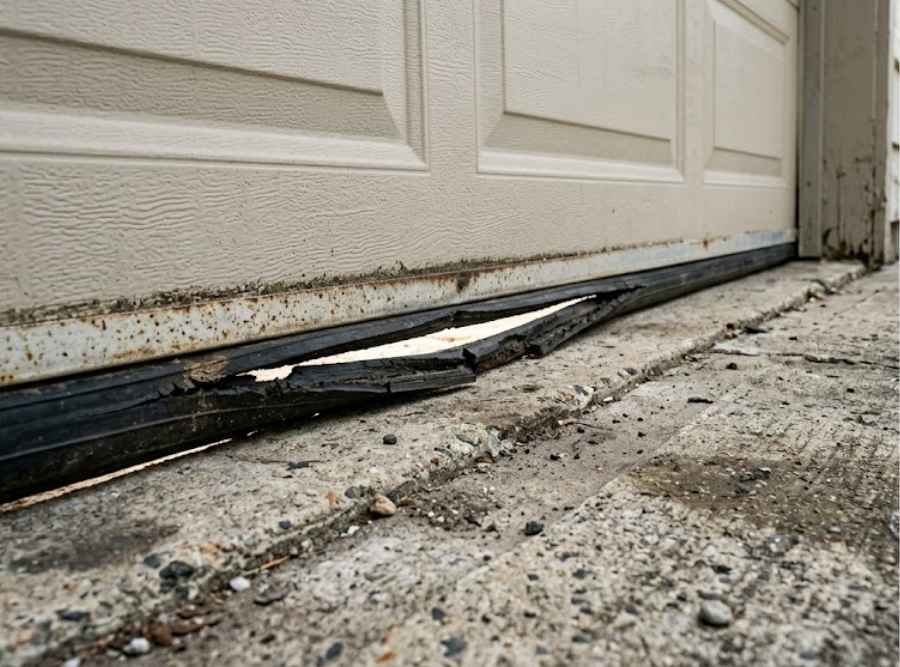
A closed garage door that lets in drafts, light, or small animals underneath it is almost always a sign that the bottom seal — also called the bottom weatherstripping has worn out, cracked, or come loose from the door, or that the garage floor beneath the door has shifted or become uneven over time. Rissland Garage Doors has been servicing garage doors throughout Northern and Central New Jersey since 1972, and this guide covers what typically causes gaps under a closed garage door so homeowners know what to check before it leads to a bigger issue.
Seeing daylight, feeling a draft, or finding evidence that something small has gotten into the garage underneath a fully closed door is more common than most homeowners expect, and it doesn’t necessarily mean anything is wrong with the door’s operation. In most cases, the door is closing and functioning normally — the gap is a sealing issue at the bottom edge, not a mechanical failure of the door itself.
What Causes Gaps Under a Closed Garage Door?
The most common cause is the bottom seal itself. This is the rubber or vinyl strip attached to the bottom edge of the door that’s designed to flex against the garage floor and close off the gap. Over time, this seal can crack, become brittle, tear, or pull away from the track that holds it in place, especially after repeated exposure to New Jersey’s temperature swings between summer heat and winter cold. A seal that’s no longer flexible enough to conform to the floor will leave small gaps even when the door is fully closed and operating correctly.
The garage floor itself can also be a factor. Concrete floors can settle, crack, or become uneven near the door opening over years, which changes the surface the seal is pressing against. A seal in good condition can still leave a gap if the floor beneath it is no longer level or has developed a low spot along the door’s path.
Does This Mean the Garage Door Isn’t Closing All the Way?
Not necessarily. A door can be closing fully and operating exactly as designed while still allowing gaps underneath, since the seal and the floor surface are separate from the door’s mechanical operation. It’s worth confirming the door is reaching full close and not stopping early due to a sensor or limit setting issue, but in most cases where drafts or light are visible along the bottom edge specifically, the door itself is closing properly and the seal is the actual issue.
What Should You Check Before Calling for Service?
A few things are safe to check without any tools:
- Look along the full width of the bottom seal for visible cracks, tears, or sections that have pulled away from the door
- Check whether the seal still has flexibility, or whether it feels stiff and brittle when pressed
- Look for visible gaps or uneven spots on the garage floor directly beneath where the door closes
- Note whether the gap is consistent across the width of the door or concentrated in one area, which can point to either a floor issue or an uneven door
Can a Worn Seal Actually Let Small Animals or Pests In?
Yes. A cracked, torn, or gapped seal creates an opening that’s often large enough for mice, insects, and other small animals to get through, particularly if the gap is concentrated at one corner or along one section of the door. This is one of the more overlooked reasons homeowners deal with pest issues in an attached garage even when there’s no obvious opening elsewhere in the space. Replacing a worn bottom seal is often enough to resolve this on its own, without needing any other pest control measures.
Is a Gap Under the Door a Bigger Energy or Moisture Problem?
It can be, especially for attached garages or garages that share a wall with living space. A consistent gap allows outside air, moisture, and temperature to transfer more freely into the garage, which can affect comfort in adjacent rooms and, over time, contribute to humidity or moisture issues inside the garage itself. This matters more in colder months, when a drafty garage door can noticeably affect how hard an adjacent room’s heating system has to work.
How Is This Fixed?
In most cases, replacing the bottom seal resolves the issue, provided the floor beneath the door is reasonably level. Bottom seals are sized to the door’s width and the type of track the seal sits in, so matching the correct replacement seal to the existing door matters for it to seal properly. If the garage floor itself is significantly uneven or sloped near the door opening, that’s a separate issue that may need to be addressed alongside the seal to fully close the gap.
What Does Rissland Check When a Homeowner Reports Drafts or Gaps Under a Closed Door?
When we’re called out for this, we check the condition and fit of the bottom seal first, since that resolves the majority of cases. We also check the garage floor surface directly beneath the door and confirm the door is reaching full close without an early stop from a sensor or limit setting. That combination tells us whether a seal replacement will fully resolve the gap or whether something else, like the floor itself, needs attention.
If your garage door is letting in drafts, light, or evidence of small animals along the bottom edge, Rissland Garage Doors can inspect the seal and floor surface to identify the actual cause. We’ve serviced garage doors throughout Northern and Central New Jersey since 1972.
Frequently Asked Questions About Gaps Under a Closed Garage Door
Why does my garage door let in light even when it’s fully closed?
This is typically caused by a worn, cracked, or misaligned bottom seal that’s no longer flexing tightly against the garage floor, or an uneven floor surface beneath the door. It usually isn’t a sign the door itself is malfunctioning.
Can mice or bugs get in through the bottom of a garage door?
Yes. A cracked or gapped bottom seal creates an opening that small animals and insects can use to enter, particularly if the gap is concentrated in one section of the door rather than spread evenly.
How do I know if my garage door’s bottom seal needs to be replaced?
Signs include visible cracking or tearing along the seal, sections pulling away from the door, a seal that feels stiff or brittle rather than flexible, or a visible gap of light along the bottom edge when the door is closed.
Does a gap under my garage door affect my energy bills?
It can, particularly for attached garages or those sharing a wall with living space. A consistent gap allows outside air and moisture to enter more easily, which can affect comfort and heating or cooling efficiency in nearby rooms.
Is a gap under the garage door caused by the floor or the door itself?
It can be either. A worn bottom seal is the most common cause, but an uneven or settled garage floor beneath the door can also create gaps even when the seal itself is in good condition.