

How Cold Does It Need to Get Before a Garage Door Freezes Shut in NJ?
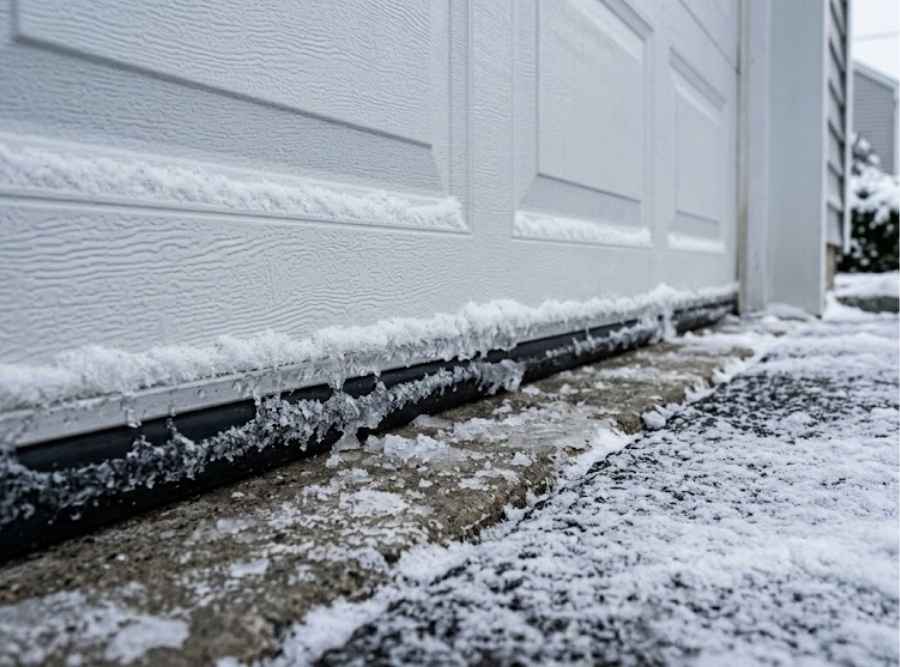
A garage door typically starts to freeze shut once temperatures drop into the low 20s°F or below, especially after snow, sleet, or freezing rain has left moisture along the bottom seal or in the track. The door itself doesn’t freeze from cold air alone — it’s moisture around the weatherstripping, track, or hardware that freezes and bonds the door to the ground or track.
New Jersey winters bring exactly the combination of conditions that cause this: temperatures that swing below freezing overnight, followed by snow or ice that melts slightly during the day and refreezes once the sun goes down. Homeowners often assume a stuck garage door means something mechanical has failed, when the real cause is a thin layer of ice holding the bottom seal to the driveway or garage floor.
What Actually Causes a Garage Door to Freeze Shut?
The freezing itself doesn’t come from cold air moving through the door — it comes from moisture that’s already present making contact with a cold surface and turning to ice. This most often happens along the rubber or vinyl bottom seal, where melted snow or rain can pool along the base of the door and then refreeze as temperatures drop overnight. Once that moisture turns to ice, it can bond the seal directly to the driveway or garage floor, holding the door in place even though nothing mechanical is actually broken.
Moisture inside the tracks can cause a similar problem higher up the door. If water gets into the track and freezes, it can restrict how the rollers move, which creates resistance that can feel like the door is stuck even before it reaches the ground.
What Temperature Range Typically Causes This in New Jersey?
Freezing along the bottom seal generally becomes a real risk once temperatures fall into the low-to-mid 20s°F, particularly overnight after any daytime snowmelt or rain. Temperatures hovering right around 32°F can still cause problems if there’s been recent precipitation, since repeated freeze-thaw cycles are often worse than a single hard freeze. New Jersey’s winter pattern of daytime melt followed by nighttime refreeze is part of what makes this a recurring issue for homes throughout the northern and central parts of the state, rather than something limited to a handful of extreme cold snaps.
What Should You Do If Your Garage Door Is Frozen Shut?
A few things are safe for a homeowner to check or try:
- Visually inspect the bottom seal and the ground beneath it for visible ice before attempting to open the door
- Use a plastic scraper or your hands to carefully break up visible ice at the base of the door, avoiding metal tools that could damage the seal
- Try gently warming the immediate area with a hair dryer on a low setting if ice is visible and accessible
- Avoid repeatedly pressing the opener button if the door doesn’t move on the first or second try
What shouldn’t happen is forcing the issue. Repeatedly triggering the opener when the door is frozen to the ground puts strain on the opener motor, the drive gear, and potentially the springs and cables, since the system is working against resistance it wasn’t designed to overcome. This is one of the more common ways a simple ice problem turns into an opener repair or a broken spring.
Can Forcing a Frozen Garage Door Cause Damage?
Yes. When the opener continues trying to lift a door that’s frozen to the ground, the motor and drive mechanism are working against far more resistance than normal, which can burn out the motor, strip the drive gear, or in some cases cause the door to separate from the opener’s trolley system entirely. If the door does break free suddenly under that strain, it can also throw off the door’s balance or damage a cable or spring that was already under added tension. If a door doesn’t move within a couple of opener cycles, it’s worth stopping and checking for ice rather than continuing to try.
Does a Garage Door Freezing Shut Mean Something Is Wrong With It?
Not necessarily. A well-maintained door can still freeze shut under the right combination of moisture and temperature, since the freezing is a weather event rather than a mechanical failure. That said, doors with worn or damaged weatherstripping tend to be more prone to it, since a seal that’s cracked or pulling away from the door doesn’t shed water as effectively and can trap more moisture right at the base. Checking the condition of the bottom seal before winter is a reasonable way to reduce how often this happens.
What Does Rissland Check When a Garage Door Freezes in Winter?
When we’re called out for a frozen door, we’re checking more than just the ice itself. We look at the condition of the bottom seal, whether the track shows signs of water intrusion, and whether repeated attempts to force the door open have caused any damage to the opener, cables, or springs. That combination tells us whether the fix is as simple as clearing the ice or whether something in the system needs attention afterward.
If your garage door has frozen shut more than once this winter, or if you’re concerned that forcing it open may have caused damage, Rissland Garage Doors can inspect the door and opener to confirm everything is operating correctly. We’ve serviced garage doors throughout Northern and Central New Jersey’s winters since 1972.
Frequently Asked Questions About Garage Doors Freezing Shut
At what temperature does a garage door freeze shut?
Freezing along the bottom seal typically becomes a real risk once temperatures drop into the low-to-mid 20s°F, especially after snow or rain has left moisture at the base of the door. Temperatures near 32°F can still cause problems during repeated freeze-thaw cycles.
Is it safe to force open a frozen garage door with the opener?
No. Repeatedly triggering the opener against a door frozen to the ground can burn out the motor, strip the drive gear, or damage cables and springs, since the system is working against resistance it wasn’t built to overcome.
How do I safely thaw a frozen garage door?
Carefully break up visible ice at the base of the door using a plastic scraper or your hands, or gently warm the area with a hair dryer on a low setting. Avoid metal tools near the seal and avoid repeatedly pressing the opener button.
Does a frozen garage door mean the weatherstripping is bad?
Not always, since even a well-maintained door can freeze under the right moisture and temperature conditions. However, cracked or worn weatherstripping tends to trap more moisture at the base and can make freezing more frequent.
Can a frozen garage door damage the opener?
Yes, if the opener continues attempting to lift the door while it’s frozen to the ground. The added resistance can burn out the motor or strip the drive gear, and in some cases affect the door’s balance or nearby hardware once it breaks free.