

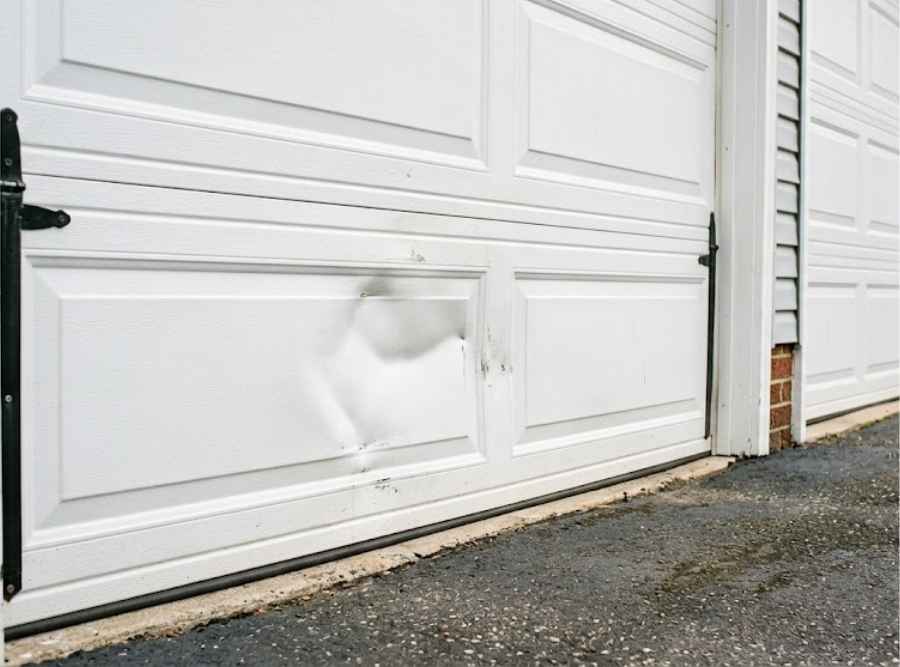
Can a Dented Garage Door Panel Be Repaired Instead of Replaced?
Yes, in most cases a single dented garage door panel can be repaired or replaced on its own rather than requiring a full door replacement. Sectional garage doors are built from individual panels specifically so one damaged section can be swapped without touching the rest of the door, and most manufacturers keep panel designs available for 8 to 10 years or longer after installation.
A dent in a garage door panel is one of the more common calls homeowners make after a minor collision — a car bumper, a bike, a wind-blown trash can, or a ladder that got away from someone. The instinct is often to assume the whole door needs replacing, especially when the dent is visible from the driveway every day. In reality, most sectional doors are designed so a single panel can be repaired or matched and replaced without affecting the rest of the system.
How Do You Know If a Dent Can Be Repaired or Needs a New Panel?
The outcome depends mainly on where the dent sits and how deep it goes. A shallow, cosmetic dent in the flat field of a steel panel — away from hinges, seams, and window inserts — is the easiest case, and on thicker-gauge steel doors it can sometimes be minimized without full panel replacement. A dent that sits within a few inches of a hinge or roller bracket is a different situation, since that’s the exact point where the panel connects to the rest of the door’s moving hardware.
Material matters too. Steel panels can sometimes be worked back into shape depending on severity and gauge. Aluminum panels tend to hold a dent permanently once the metal deforms, since aluminum doesn’t flex back the way steel does. Wood panels can sometimes be filled and refinished if the damage is purely cosmetic, but a cracked or splintered wood panel typically needs to be replaced rather than repaired.
When Does Panel Replacement Make More Sense Than Repair?
Replacement is usually the more practical route in a few specific situations:
- The dent is deep enough that it has permanently deformed the panel’s shape, not just dented the surface
- The damage sits near a hinge, roller bracket, or panel seam
- The impact has caused the panel to bow, which can throw off how evenly the door sits in its tracks
- The panel already has surface rust or corrosion at the point of impact, which can turn a simple dent into a crease or tear
Replacing a single panel is almost always more practical than replacing the entire door, provided a matching panel is available. Most garage door manufacturers keep panel designs in production for roughly 8 to 10 years, sometimes longer, so a door that’s a few years old typically has replacement panels available through the original manufacturer or a compatible supplier. This is one of the reasons it’s worth having a technician identify the door’s manufacturer and model before assuming replacement isn’t an option.
Does a Dented Panel Affect the Rest of the Garage Door?
A dented panel rarely exists in isolation from the rest of the door system. Before recommending repair or replacement, it’s worth checking whether the impact affected anything beyond the visible dent — hinges can bend, rollers can be knocked slightly out of their tracks, and in harder impacts, the door’s balance can shift. A door that looks fine except for one dented panel can still be operating under added strain if a hinge or roller was affected in the same impact.
Continuing to run the opener without checking the rest of the system is where a single-panel repair can turn into a larger job. A bent hinge or misaligned roller left unaddressed can accelerate wear on the opener and on neighboring panels, since the door isn’t moving through the track the way it was designed to.
Does One Dented Panel Mean You Need a New Garage Door?
No, this is one of the most common assumptions homeowners make, and it’s rarely true for a single dent on a sectional door. Individual panels are designed to be replaceable components, not part of one solid structure. The exception is on older doors where the specific panel design has been discontinued, or where the damage extends beyond the panel itself into the track, hinges, or door balance. In those cases, full door replacement may end up being the more sensible long-term option but that’s a conclusion worth reaching after an inspection, not before one.
Does New Jersey Weather Make Panel Damage Worse?
Yes, in some cases. Steel panels that have already started to rust along a seam or edge — common after several New Jersey winters of road salt and moisture exposure are more likely to crease or tear at the site of an impact than a panel in good condition. A dent on a panel that already shows surface rust is worth a closer look, since the underlying damage may be more structural than it first appears.
What Does Rissland Check Before Recommending Repair or Replacement?
When we’re called out for a dented panel, the dent itself is only part of what gets checked. Our technicians look at the panel material and age, whether the manufacturer still produces a matching panel, whether the impact affected nearby hinges or rollers, and whether the door is still operating in balance. That’s typically enough to tell a homeowner honestly whether a panel swap makes sense or whether the damage points to something larger.
If your garage door has a dented, bowed, or cracked panel, having it inspected before deciding on repair or replacement can save you from either an unnecessary full replacement or a repair that doesn’t address the underlying problem. Rissland Garage Doors has been working on garage doors throughout Northern and Central New Jersey since 1972, and our technicians can identify whether your existing panel can be matched and replaced before recommending anything more involved.
Frequently Asked Questions About Dented Garage Door Panels
Can a dented garage door panel be fixed without replacing the whole door?
Yes, in most cases. Sectional garage doors are built from individual panels, so a single dented section can typically be repaired or matched and replaced without affecting the rest of the door, as long as a compatible panel is still available from the manufacturer.
How do I know if my dent is cosmetic or structural?
A shallow dent away from hinges, seams, and rollers is usually cosmetic, while a dent near hardware attachment points, a bowed panel, or a crease is more likely to affect the door’s structure and balance. A technician can check whether the impact affected anything beyond the visible dent.
Will a dented panel get worse if I don’t fix it?
It can, especially if the dent is near a hinge or roller, or if the panel already has rust or corrosion. A dent that has bent nearby hardware can put additional strain on the opener and surrounding panels over time.
Can steel and aluminum garage door panels both be repaired the same way?
Not usually. Steel panels can sometimes be worked back into shape depending on severity, while aluminum panels tend to hold a dent permanently once the metal deforms. Wood panels can sometimes be filled and refinished if the damage is cosmetic.
How long does it take to replace a single garage door panel?
Once a matching panel is sourced, most single-panel replacements are completed in one service visit, though exact timing depends on the door’s manufacturer, panel availability, and whether any hardware also needs adjustment or replacement.

Rissland Garage Doors & Services Team. Serving New Jersey for over 50 years, the expert team at Rissland Garage Doors specializes in residential door repair, opener installations, and emergency service. Operating with salaried, non-commissioned technicians, their team offers trusted guidance on garage door safety, spring maintenance, and weatherproofing across Essex, Morris, and Passaic counties.